
 Technology
 Business
 Food & Recipe

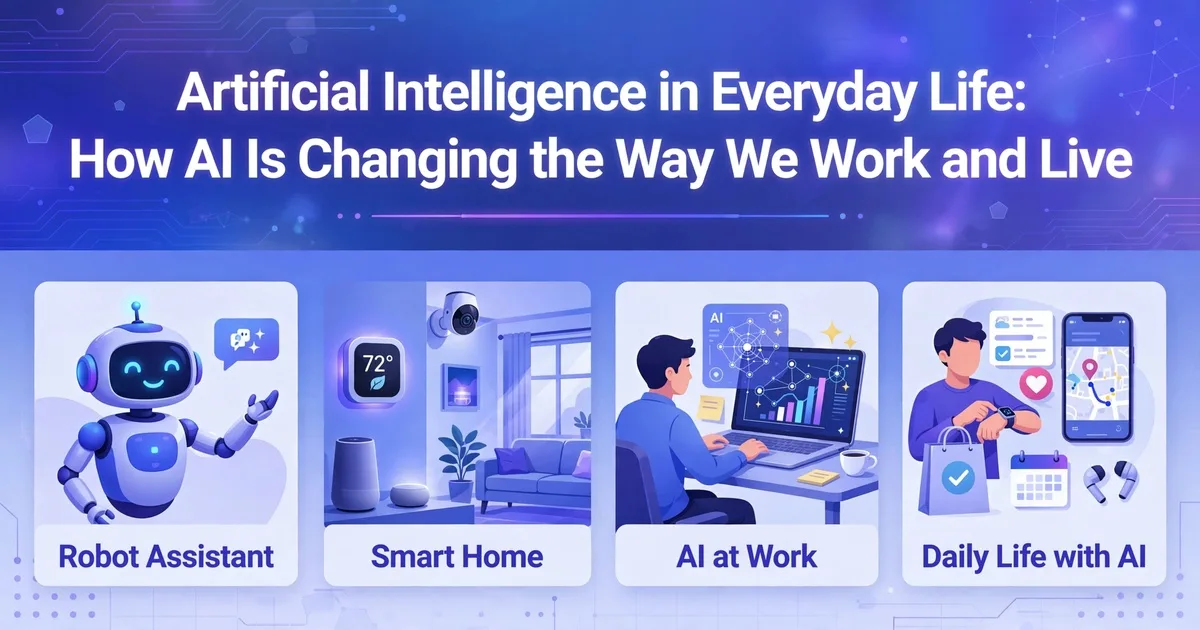
Artificial Intelligence in Everyday Life: How AI Is Changing the Way

Artificial intelligence has quickly become one of the most influential technologies in the modern digital world. What was once mainly discussed as a futuristic concept is now being used in smartphones, websites, business software, search engines, and many everyday applications. AI is changing how people work, communicate, learn, and interact with technology.
One of the most familiar examples of AI is the smart assistant. Many smartphones and digital platforms use artificial intelligence to understand voice commands, recognize patterns, provide recommendations, and help users complete tasks. These systems continue to become more capable as they process information and learn from large amounts of data.
AI is also transforming content creation. Modern AI tools can help users generate written content, create images, summarize information, translate languages, and organize ideas. For writers, marketers, developers, students, and businesses, these tools can reduce the time required for repetitive tasks and provide useful starting points for creative work.
Businesses are increasingly adopting AI to improve efficiency. Customer support systems can use AI-powered chatbots to answer common questions, while companies can analyze large datasets to identify trends and make more informed decisions. Automation can also handle repetitive administrative tasks, allowing employees to spend more time on activities that require creativity, judgment, and human interaction.
Education is another area where AI has significant potential. Intelligent learning platforms can help students understand difficult concepts, practice new skills, and receive personalized explanations. Teachers can also use AI-based tools to organize educational materials and reduce some routine administrative work.
However, the rapid growth of artificial intelligence also creates important challenges. Accuracy, privacy, cybersecurity, copyright, and responsible use are all issues that need careful consideration. AI systems can produce incorrect or misleading information, so important decisions should not rely on automated output without appropriate human verification.
The future of AI will likely involve even deeper integration into everyday technology. As AI systems become more capable, people may interact with computers in more natural ways, while businesses may automate increasingly complex processes.
Artificial intelligence should not simply be viewed as a replacement for human abilities. Its greatest value may come from combining machine capabilities with human creativity, experience, and judgment. Learning how to use AI responsibly and effectively can therefore become an important skill in the modern digital economy.
The AI revolution is still developing, and its long-term impact remains difficult to predict. One thing is clear: artificial intelligence is already changing the digital world, and its influence is likely to continue growing for years to come.

Join our Telegram to get all the updates.

Recent Posts
 Modern Lifestyle: Simple Ways to Create a Happier and More Balanced Life
 Healthy Living: Simple Habits for a Better and More Active Life
 Smart Financial Planning: Simple Strategies for a Better Financial Future
 How Small Businesses Can Grow in a Competitive Digital World
 The Future of Technology: How Smart Innovation Is Changing Our Everyday Lives

Comments (0)
Be the first to comment.