
 Dog Care
 Cat Care
 Small Pets
 Pet Food & Nutrition
 Training & Behavior
 Pet Care & Grooming
 Pet Gear & Supplies
 New Pet Owners
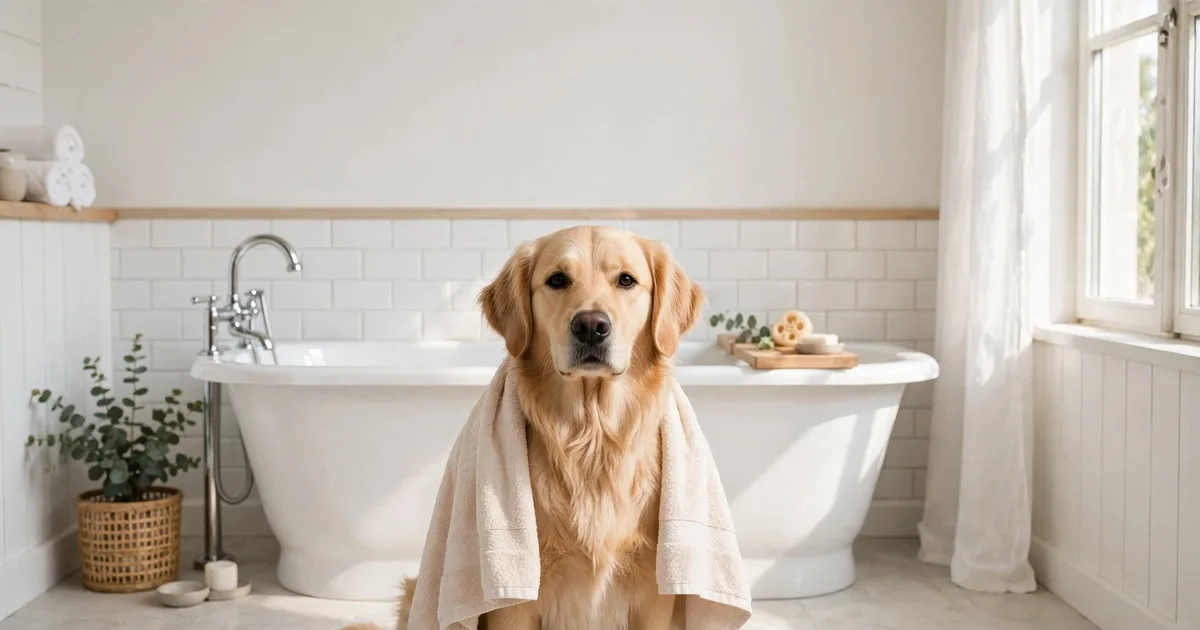
How to Bathe a Dog at Home: A Step-by-Step Guide
Your dog just rolled in something that smells like a swamp, and the groomer can’t fit you in until next week. The good news is that learning how to bathe a dog at home is easier than most owners expect, and you don’t need fancy gear. This guide covers the supplies, the exact steps, drying, and what to do if your dog panics at the sight of the tub. You’ll also find tips for puppies, seniors, and different coat types, plus the signs that a vet visit should come before the next bath.
Quick answer: To bathe a dog at home, brush out tangles first, wet the coat with lukewarm water, lather with a dog-specific shampoo, rinse until no suds or slippery feel remain, and dry thoroughly. Expect 20 to 45 minutes depending on your dog’s size and coat.
- Use only shampoo made for dogs, and keep water out of the ears and eyes.
- Put a non-slip mat under your dog’s feet.
- Many healthy dogs do fine with a bath every month or two, but coat, skin, and lifestyle change that.
- Red, sore, or constantly itchy skin is a reason to call your vet, not to bathe more.
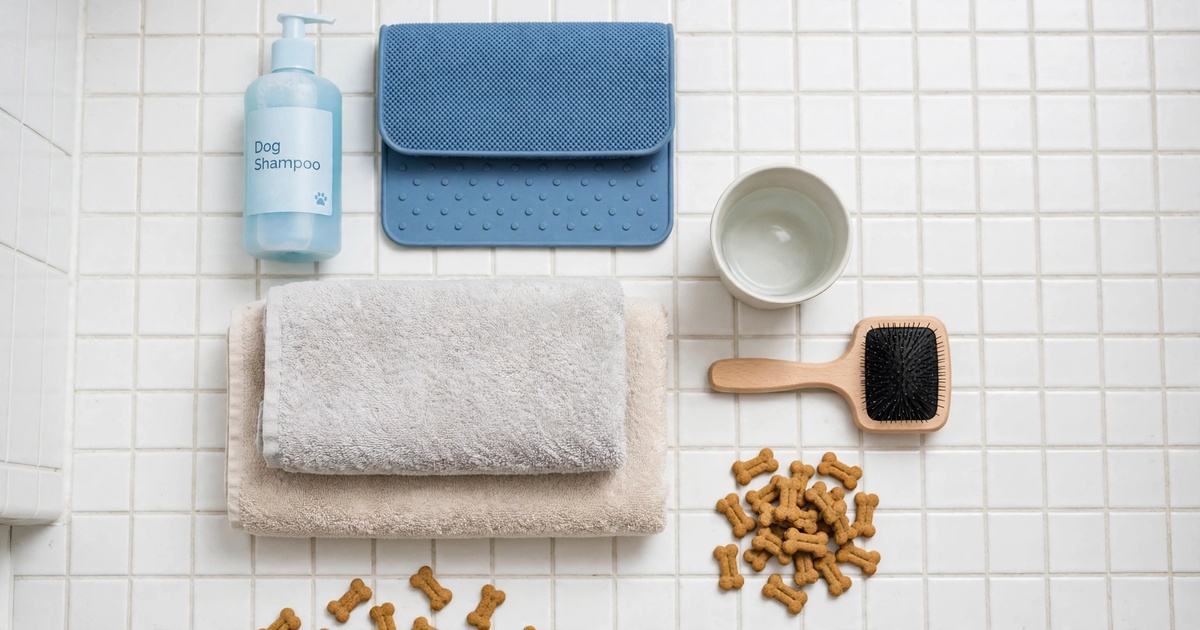
What You’ll Need (and What It Costs)
You probably own half of this already. Prices vary by store and region, so treat these as rough US ranges.
| Item | Why you need it | Rough cost (USD) |
|---|---|---|
| Dog shampoo | Dog skin differs from human skin, and human shampoo can irritate it | $8-$20 |
| Non-slip mat | A slipping dog is a scared dog | $8-$20 |
| Handheld sprayer or plastic cup | Rinses evenly without blasting your dog | $10-$25 (cup under $5) |
| Brush or comb for your dog’s coat type | Removes loose hair and tangles before water makes them worse | $5-$15 |
| 2-3 absorbent towels | Old bath towels work fine | $0-$30 |
| Drain catcher | Dog hair clogs drains fast | $3-$8 |
| Treats (small, soft) | Rewards keep the bath positive | $5-$15 |
A professional bath often runs roughly $40-$100 or more, depending on your area and your dog’s size. That’s the main saving if you wash at home regularly.
Prep Work That Makes Everything Easier
Set up before your dog enters the room. Once the dog is wet, you can’t leave to grab something.
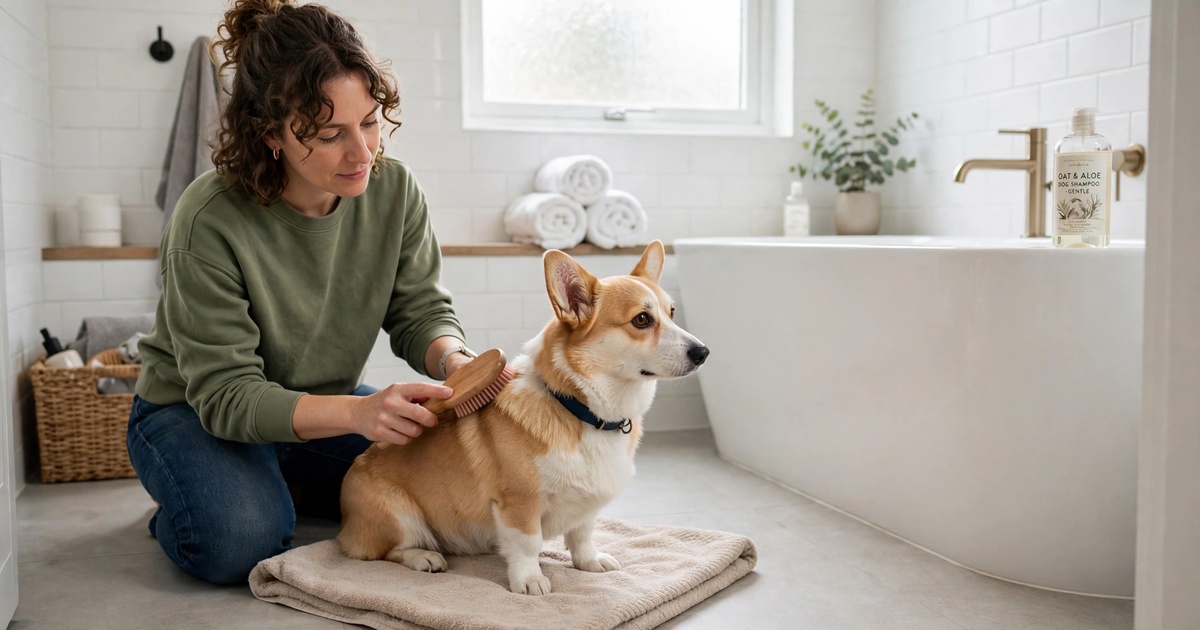
- Brush first. Water tightens mats and tangles, which makes them painful to remove later. If you find thick mats, skip the bath and see a groomer or vet.
- Pick your spot. A kitchen sink works for small dogs. A bathtub suits medium and large dogs. In warm weather, a shaded yard with a hose set to lukewarm also works.
- Lay down the mat and put the drain catcher in place.
- Line up your supplies within arm’s reach, including towels and treats.
- Offer a potty break beforehand. Nervous dogs often have accidents once they’re in the tub.
How to Bathe a Dog at Home, Step by Step
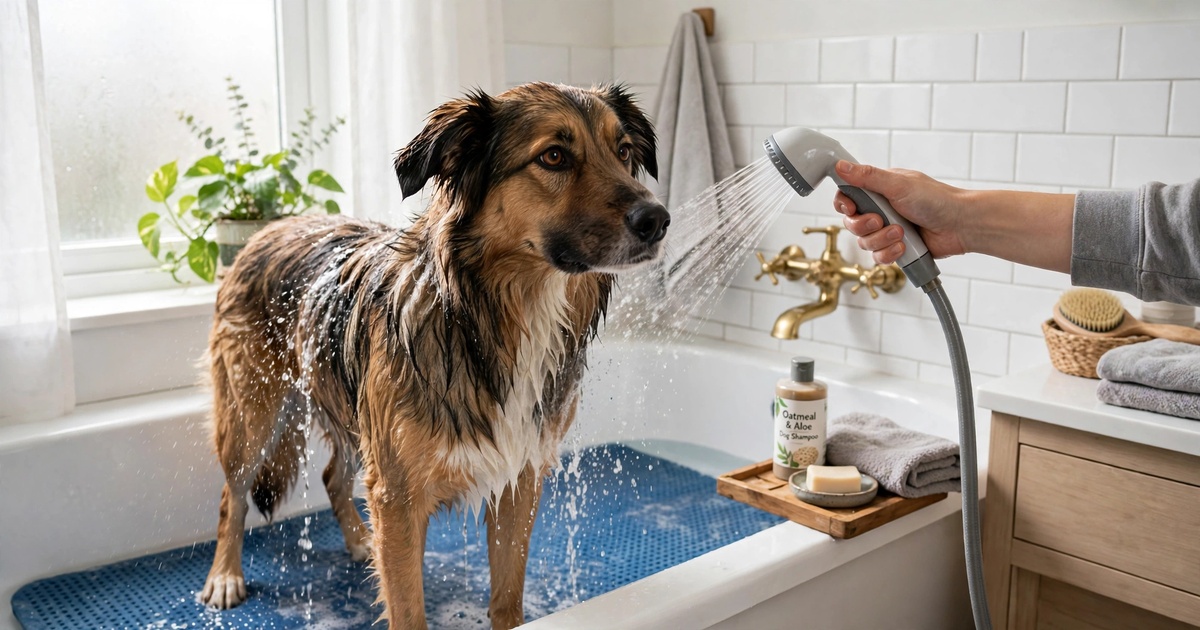
- Brush the coat. This removes loose hair so it doesn’t clog the drain or clump into mats.
- Lead your dog to the bath with a treat. Start calm. A relaxed start sets the tone for the whole session.
- Wet the coat with lukewarm water. Water should feel comfortable on the inside of your wrist, never hot. Start at the neck and work back, keeping water away from the face. Use a cup or a gentle spray, since strong jets can frighten dogs.
- Apply shampoo. Follow the label, since some shampoos need diluting. Work from the neck to the tail, then the legs, belly, and paws. Washing neck-first keeps suds away from the eyes. Leave the shampoo on for as long as the label says.
- Wash the face last with a damp washcloth. Skip shampoo near the eyes, nose, and mouth. Wipe only the outer part of the ears. Never pour water into them.
- Rinse longer than you think you need to. Leftover shampoo is a common cause of itchy, flaky skin. Check the armpits, belly, groin, between the toes, and under the tail. Keep rinsing until the coat no longer feels slippery.
- Add conditioner only if your dog’s coat needs it. Use a dog-formulated product, and rinse it out fully.
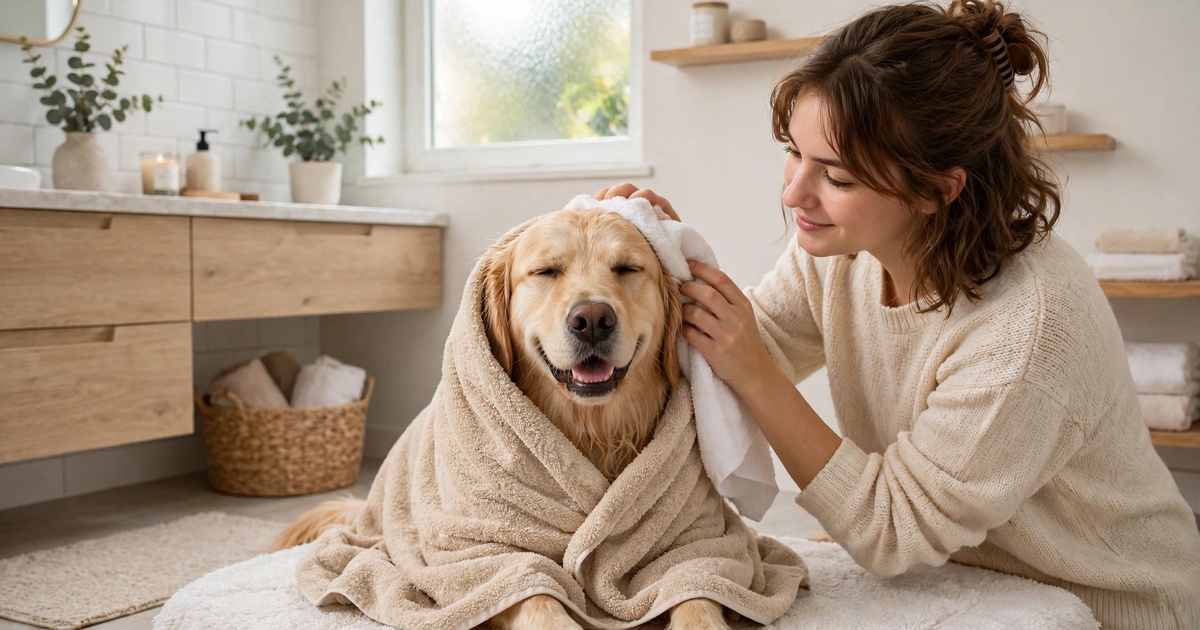
- Squeeze, then towel off. Gently squeeze water from the legs and tail, then wrap your dog in a towel before they shake. Rub in the direction the hair grows.
- Dry thoroughly. Damp fur can leave skin irritated, especially in skin folds and thick coats. Towels may be enough for short coats. For longer coats, use a hair dryer on the lowest heat or cool setting, keep it moving, and hold it a hand’s width away. Skip the dryer entirely if it scares your dog.
- Reward your dog and brush again once dry. Keep your dog indoors and warm until fully dry, especially in cold weather.
How Often Should You Bathe Your Dog?
There’s no single schedule. Many healthy dogs with typical coats do well with a bath every month or two. A dog that swims, digs, or rolls in mud may need more. A dog with dry or sensitive skin may need fewer.
Bathing too often can strip natural oils and leave skin dry and itchy. If your dog seems to need frequent baths to stay comfortable, talk to your vet before increasing the schedule. Also ask your vet before using any medicated shampoo, since those should be used only as directed.
Bathing is one piece of your dog’s overall routine. For the bigger picture, see How to care for a dog.
Adjusting the Bath for Your Dog
Puppies
Puppies chill quickly, so keep baths short and the room warm. Ask your vet when a first bath is appropriate for your puppy, since it can depend on age and vaccination status. Excited puppies often have accidents in the tub, so a potty break first helps. If house training is still a work in progress, How to potty train a puppy can help.
Senior dogs
Stiff joints make slippery surfaces especially scary. Use a good mat, support your dog’s hindquarters if needed, and keep the bath brief. Warm towels afterward feel good on aging bodies.
Small vs. large dogs
Small dogs are easy to handle in a sink but lose heat fast, so dry them promptly. Large dogs may need a tub with a handheld sprayer, and a second person helps. Expect extra time for rinsing and drying.
Coat types
- Double coats (such as Huskies or Golden Retrievers) hold water deep in the undercoat. Rinse for longer, and allow plenty of drying time. Don’t shave a double coat to make bathing easier.
- Long or curly coats mat easily. Brush thoroughly before and after.
- Short coats are the simplest, but still need a full rinse.
- Flat-faced dogs and wrinkly breeds need skin folds dried carefully. Flat-faced dogs may also struggle to breathe if stressed, so keep water off the face and the session calm and short.
What If Your Dog Hates Baths?
Fear is common, and force makes it worse. Use a reward-based approach and take it in small steps over several days:
- Let your dog explore the empty tub with treats.
- Add the non-slip mat and reward calm behavior.
- Run the water without the dog nearby, then reward your dog for staying relaxed.
- Wet one paw with lukewarm water, then reward.
- Build up gradually to a full bath.
A lick mat can keep your dog busy during shampooing. If you use peanut butter, check the label and make sure it contains no xylitol, which is toxic to dogs.
Picture a rescue dog who’s new to your home and trembles at the sound of running water. Stretching these steps over a week or two is far kinder than rushing one stressful bath. If your dog still panics, stop and consider a professional groomer or a certified trainer who uses reward-based methods.
Common Mistakes to Avoid
- Using human shampoo. It’s formulated for human skin and can irritate your dog’s.
- Water that’s too hot. Dogs can burn or become stressed. Lukewarm is the target.
- Skipping the brush-out. Water tightens mats.
- Rinsing too quickly. Leftover soap is a top cause of itchy skin.
- Getting water in the ears. Wipe the outer ear only.
- Leaving your dog alone in the tub. Dogs can slip, jump out, or injure themselves in seconds.
- Bathing too often. More isn’t better for skin.
- Forcing a frightened dog. It builds fear and makes future baths harder.
When to See a Vet
Call your vet before bathing if you notice:
- Red, inflamed, or sore skin, or bumps and scabs
- Hair loss or patchy coat
- Constant scratching, licking, or chewing at the skin
- A strong smell that returns soon after baths
- Discharge from the ears, or frequent head shaking
- New lumps or swellings you find while washing
Contact your vet promptly if, after a bath, your dog is shivering and lethargic, vomits after swallowing shampoo, or seems uncomfortable and itchy. Don’t try to treat skin or ear problems at home with leftover products, and don’t give any medication without veterinary guidance.
Get emergency help immediately if your dog has trouble breathing, collapses, or has a seizure. If your dog has gotten into something that could be toxic, such as paint, oil, pesticide, or an unknown chemical, don’t just wash it off. Call your vet, an emergency animal clinic, or a pet poison helpline right away.
For fleas and ticks, ask your vet which treatment fits your dog’s age, size, and health. The right product depends on those factors, so avoid combining products on your own.
FAQ
Can I use human shampoo on my dog?
It’s best not to. Human shampoo is made for human skin and can irritate or dry out a dog’s skin. Choose a shampoo labeled for dogs, and ask your vet for a recommendation if your dog has sensitive skin or a skin condition.
How often should I bathe my dog?
Many healthy dogs do well with a bath every month or two, but it varies with coat type, activity level, and skin. Washing too often can dry out the skin. If your dog needs frequent baths to stay comfortable, check in with your vet.
Should I brush my dog before or after a bath?
Both. Brush before to remove loose hair and tangles, since water makes mats tighter. Brush again after your dog is fully dry to smooth the coat and spot any skin issues. If you find thick mats, see a groomer rather than bathing first.
How do I dry my dog after a bath?
Start with absorbent towels, squeezing water out gently. For thicker coats, use a dryer on the lowest heat or cool setting, kept moving and held a hand’s width away. Never use high heat. Keep your dog warm and indoors until completely dry.
What should I do if my dog has fleas?
Talk to your vet. Flea treatments vary by age, weight, and health, and some products shouldn’t be combined. Bathing alone usually won’t solve a flea problem, and your vet can recommend a safe plan for your dog and your home.
Final Thoughts
Learning how to bathe a dog at home comes down to preparation, lukewarm water, a thorough rinse, and patience. If your dog is nervous, take it slowly and reward calm behavior. Your next step is simple: gather your supplies, set up a non-slip spot, and do a short practice session with treats before your first full bath.
Join our Telegram to get all the updates.

Comments (0)
Be the first to comment.