
 Dog Care
 Cat Care
 Small Pets
 Pet Food & Nutrition
 Training & Behavior
 Pet Care & Grooming
 Pet Gear & Supplies
 New Pet Owners
Rabbit Care for Beginners: Everything You Need to Know
You’ve fallen for a bunny at the shelter, or maybe your kid has been asking for one for months. Before you commit, it helps to know that rabbits aren’t low-maintenance starter pets. They need space, a very specific diet, and a vet who understands them. This guide covers rabbit care for beginners, from setting up a home to spotting trouble early, so you can decide if a rabbit fits your life and care for one well if it does.
Quick Answer: Rabbit Care Basics
- Hay is the foundation. Unlimited grass hay should make up most of a rabbit’s diet, with fresh leafy greens and a small, measured portion of pellets.
- Rabbits need room. A roomy pen plus several hours of daily exercise space beats a small hutch or cage every time.
- They’re social. Most rabbits do best with a bonded companion, or at least a lot of daily interaction.
- Find an exotic-savvy vet before you need one. Rabbits hide illness, and not eating or pooping is an emergency.
What to Know Before You Bring a Rabbit Home
Rabbits commonly live 8 to 12 years with good care, so this is a long commitment. They’re also prey animals. Rabbits tend to feel safest with their feet on the ground, so many dislike being picked up and carried, even when they love you.
A few other realities that surprise first-time owners:
- They chew. Baseboards, cords, and furniture legs are all fair game, so rabbit-proofing is part of the job.
- They’re most active at dawn and dusk. Expect some activity when you’re getting ready for bed or waking up.
- They’re not ideal for toddlers. Small children can accidentally hurt rabbits, and rabbits can kick hard when frightened.
- Many landlords and housing rules treat them differently from cats and dogs. Check your lease first.
If you’re also weighing other pets, our guides on how to care for a dog and how to care for a cat can help you compare time and cost.
Housing: How Much Space Does a Rabbit Need?

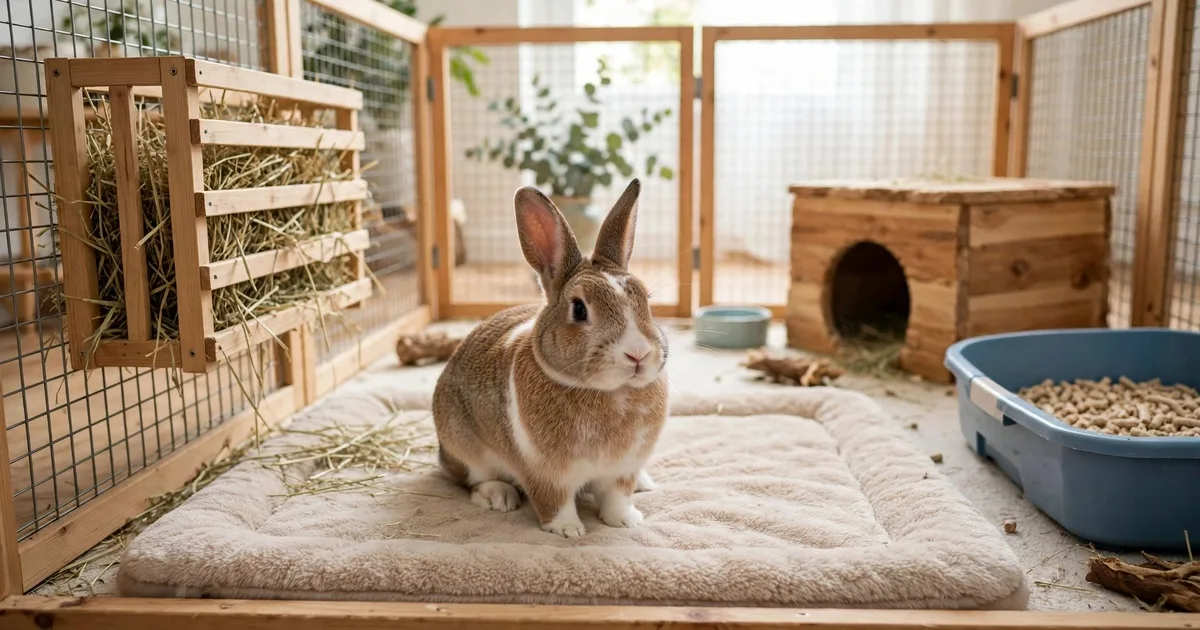
Skip the small pet-store hutch. A better setup is a large exercise pen or a rabbit-proofed room that serves as a home base, with space to hop, stretch out fully, and stand up on their back legs.
As a rough minimum, aim for a pen of around 8 square feet (0.75 m²) or more, plus several hours a day in a larger, safe play area. More is better.
Your rabbit’s home base should include:
- Solid flooring or a soft mat. Wire floors can hurt rabbits’ feet.
- A hiding spot. A cardboard box or a simple wooden hide gives them somewhere to feel safe.
- A litter box with hay. Rabbits like to eat and poop in the same spot.
- A heavy water bowl or a bottle. Many rabbits drink more easily from a bowl, but either works.
- Chew toys. Untreated wood blocks, willow balls, and cardboard are good options.
Indoor versus outdoor: Indoor housing is generally safer. Predators, extreme weather, and parasites are real risks outside. Rabbits struggle in heat, so keep them cool, since temperatures much above roughly 80°F (27°C) can become dangerous.
Litter and bedding: Avoid clumping clay litter and cedar or pine shavings. Paper-based or aspen-type litter is a common choice. Ask your vet if you’re unsure.
Rabbit Diet: Hay, Greens, Pellets, and Treats
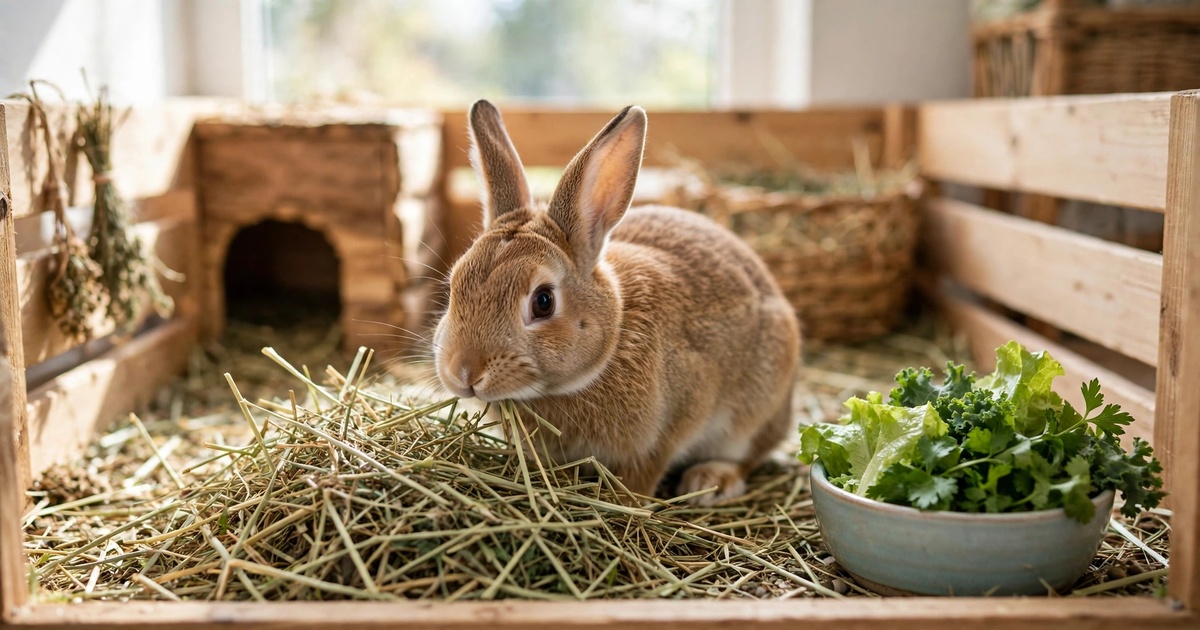
Diet is where beginners most often go wrong, and it matters because a rabbit’s digestive system depends on constant fiber.
Hay (the main course). Grass hay such as timothy, orchard, or meadow hay should be available around the clock, and it should make up the large majority of what your rabbit eats. Hay keeps their gut moving and wears down teeth that never stop growing. Young rabbits are often fed richer hay, such as alfalfa, but adults generally switch to grass hay. Your vet can tell you when.
Fresh greens. Offer a variety of leafy greens daily, such as romaine, cilantro, or parsley, in a portion that fits your rabbit’s size. Introduce new vegetables slowly, one at a time, so you can spot any tummy upset.
Pellets. Think of pellets as a supplement, not the main meal. Look for plain, high-fiber pellets without colorful seeds or sugary mix-ins. The right amount depends on your rabbit’s age, size, and health, so your vet sets the exact portion.
Treats. Fruit is sugary, so keep it to a small bite now and then. Skip crackers, bread, yogurt drops, and anything made for humans.
Never feed: Chocolate and onions, garlic, or related vegetables are unsafe for rabbits. If you’re unsure whether a food or houseplant is safe, ask your vet before offering it.
Water: Fresh water should always be available. Change it daily and clean the bowl or bottle regularly.
Litter Training Your Rabbit
Most rabbits pick up litter habits quickly, especially after they’re spayed or neutered. Use rewards and patience, and never scold accidents.
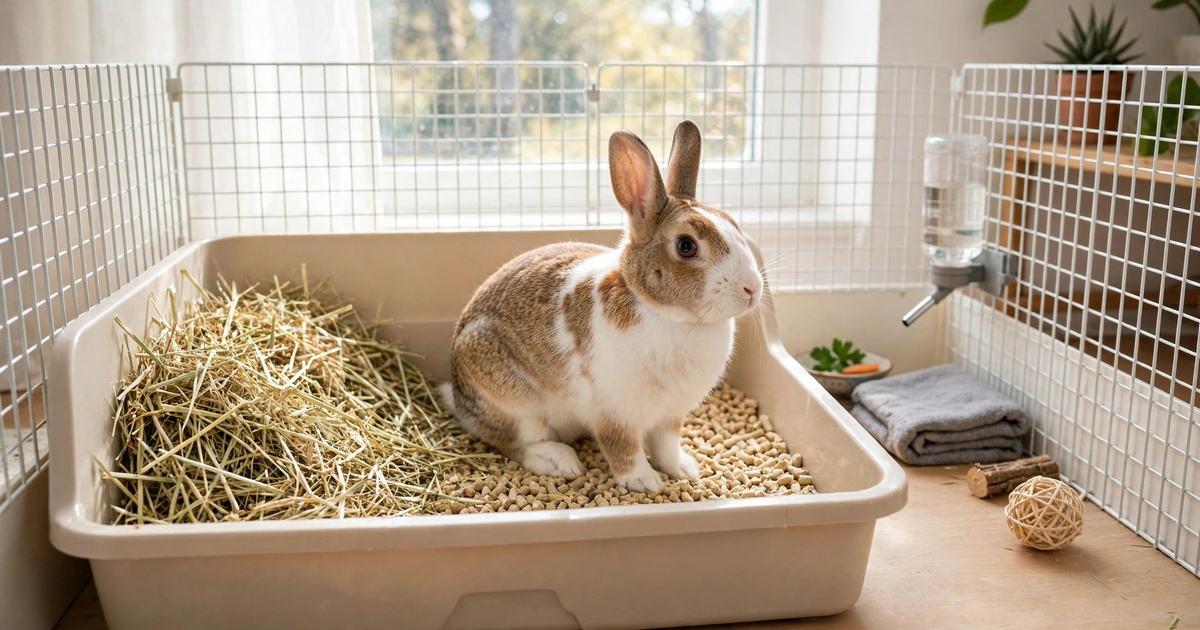
- Pick the spot your rabbit already prefers. Rabbits tend to choose a corner. Put the box there instead of fighting it.
- Fill it with hay. Rabbits often munch while they go, so hay on one side encourages them to use the box.
- Add a few droppings. The scent helps them understand what the box is for.
- Reward success. When you see your rabbit use the box, offer a small leafy green right away.
- Clean accidents quietly. Use a pet-safe cleaner to remove odor so they aren’t drawn back to the same spot.
- Expand slowly. Give more space only after the box is reliably used in a smaller area.
If progress stalls, check whether the box is too small, too far from their favorite corner, or changed too often. A sudden change in litter habits can also signal a health problem, so mention it to your vet if it’s out of character.
Handling, Bonding, and Daily Interaction
Let your rabbit come to you. Sit on the floor, stay calm, and offer a treat from your hand. Over days and weeks, most rabbits become curious and then relaxed.
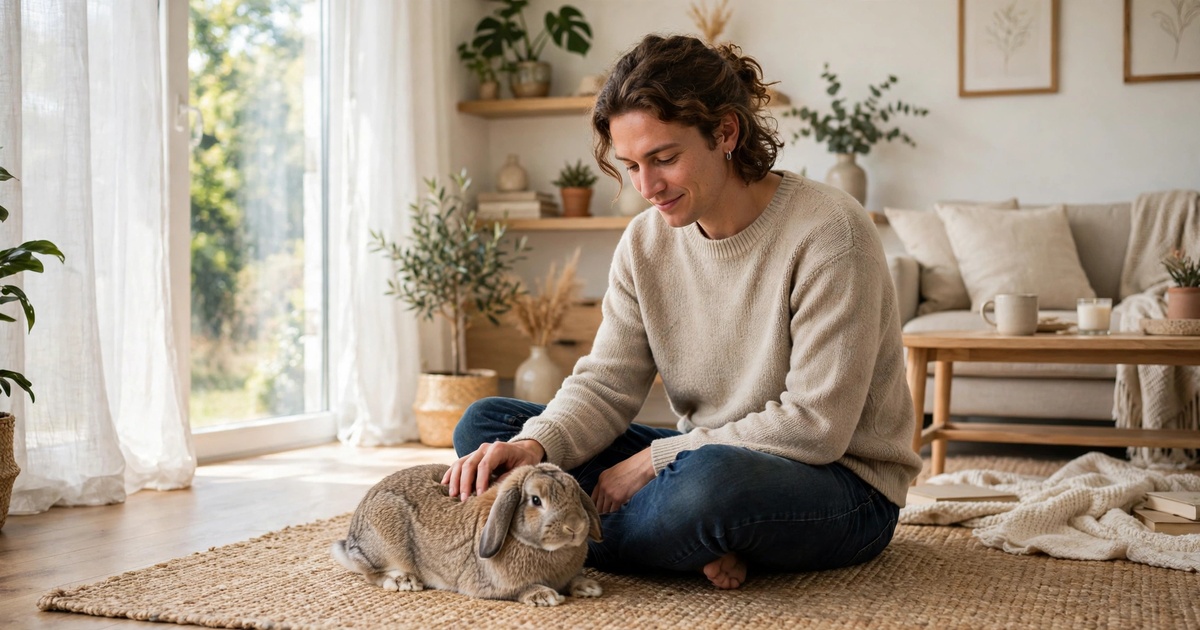
- Never pick a rabbit up by the ears. Support the chest and hindquarters if you must lift, and keep them close to your body. Many rabbits are happier when you avoid lifting at all and just pet them on the floor.
- Learn their language. A relaxed rabbit may flop on its side or “binky” (jump and twist in the air). A stomping back foot signals alarm.
- Consider a companion. Rabbits are social, and many do well with a bonded partner. Bonding takes time and should be done carefully, ideally with your vet’s or a shelter’s guidance, since introductions can lead to fights.
Plan on at least a few hours a day of out-of-pen time and real interaction. A rabbit shut in a pen with little attention can become bored, destructive, or withdrawn.
Health Basics and Grooming
Find the right vet first. Many general practices don’t treat rabbits. Look for an exotic-savvy vet and schedule a new-pet checkup soon after adoption.
Spay or neuter. Most vets recommend it for health and behavior reasons, and it helps with litter habits. Your vet will advise on timing.
Vaccines and parasite control. Vaccination needs vary by region and risk. In some areas, rabbits are vaccinated against serious viral diseases. Your vet will advise on what’s right where you live. Never use dog or cat flea or tick products on a rabbit unless your vet approves, because some can be dangerous.
Teeth. Rabbits’ teeth grow continuously, and hay keeps them worn down. Drooling, dropping food, or a messy chin can be signs of a dental problem that needs a vet.
Nails and brushing. Rabbits need regular nail trims. Cutting into the quick (the pink, blood-filled part) can be painful and cause bleeding, so ask your vet or a groomer to show you the first time. Brush more often during shedding to reduce hair swallowing.
Heat and stress. Keep your rabbit’s space cool, quiet, and away from loud noises or dogs that might frighten them.
How Much Does a Rabbit Cost?
Prices vary widely by region, so treat these as rough U.S. estimates.
| Expense | Rough cost (USD) |
|---|---|
| Adoption fee | $20–$100+ |
| Pen, hide, litter box, bowls, toys (setup) | $100–$300 |
| Spay/neuter | $150–$500+ |
| Monthly hay, greens, pellets, litter | $40–$90 |
| Routine vet visit | $60–$150+ |
| Emergency exotic vet care | $300–$2,000+ |
Plan an emergency fund. Rabbit emergencies can get expensive quickly.
Common Beginner Mistakes
- Too little hay. This is the most common problem. If your rabbit’s hay pile is gone, refill it.
- Too many pellets or treats. Overfeeding pellets can lead to picky hay eating.
- Housing in a small cage. Rabbits need space to move daily.
- Skipping a vet checkup. Rabbits hide illness well, so don’t wait for obvious signs.
- Expecting a cuddly lap pet. Many rabbits prefer to interact on their own terms.
- Switching foods suddenly. Change diet gradually.

When to See a Vet
Rabbits can go downhill quickly, so don’t wait and see. Contact your vet or an emergency animal clinic right away if you notice:
- Not eating or not pooping for half a day or more. This is an emergency in rabbits.
- Very small, dry, or no droppings, or a bloated, hard belly.
- Labored or noisy breathing, or open-mouth breathing.
- Lethargy, hunching in a corner, or teeth grinding loudly (a sign of pain).
- Head tilt, loss of balance, or seizures.
- Wet, matted fur around the bottom, or signs of flies or maggots on the skin.
- Drooling, trouble chewing, or a swollen face.
- Collapse or unresponsiveness.
- Suspected poisoning after eating a plant, food, or product.
I’m not a veterinarian, and this guide can’t replace one. For any change in appetite, droppings, behavior, or litter habits, call your vet. Pain or illness can change a rabbit’s behavior, so always rule out health issues before assuming it’s a training problem.
FAQ
How much space does a pet rabbit need?
As much as you can reasonably give. A roomy pen with a hide and litter box, plus several hours a day in a larger safe area, is a good baseline. A small hutch or cage isn’t enough for a rabbit to move, stretch, and play comfortably.
What do rabbits eat every day?
Mostly unlimited grass hay, along with fresh leafy greens and a small, measured portion of plain pellets. Fruit is an occasional treat. Your vet can tell you the right pellet portion for your rabbit’s age and size.
Do rabbits need a friend?
Many do well with a bonded companion, since rabbits are social animals. Others bond closely with their owners. Introductions should be done carefully, because rabbits can fight, so ask your vet or a rescue for guidance.
Are rabbits good pets for beginners?
They can be, if you’re prepared for their needs. Rabbits require space, daily time, a specialized diet, and an exotic vet, so they’re more demanding than many people expect.
Can rabbits live outside?
It’s generally safer to keep rabbits indoors. Outdoor rabbits face predators, weather extremes, and parasites. If you do keep them outside, you need secure, predator-proof housing and careful temperature management, and your vet can advise on the risks in your area.
Final Thoughts
The most important rabbit care basics are unlimited hay, plenty of space, and a vet who knows rabbits. Get those right and most other problems become easier to prevent. Your next step: find an exotic-savvy vet near you and ask what they recommend for a new rabbit before you bring one home.
Join our Telegram to get all the updates.





Comments (0)
Be the first to comment.